Thursday, April 30
- Victims of Communism Museum Special Tour and Meeting with President of the Victims of Communism Memorial Foundation Dr. Eric Patterson
- Senate Staff Roundtable
Victims of Communism Museum Special Tour and Meeting with President of the Victims of Communism Memorial Foundation Dr. Eric Patterson
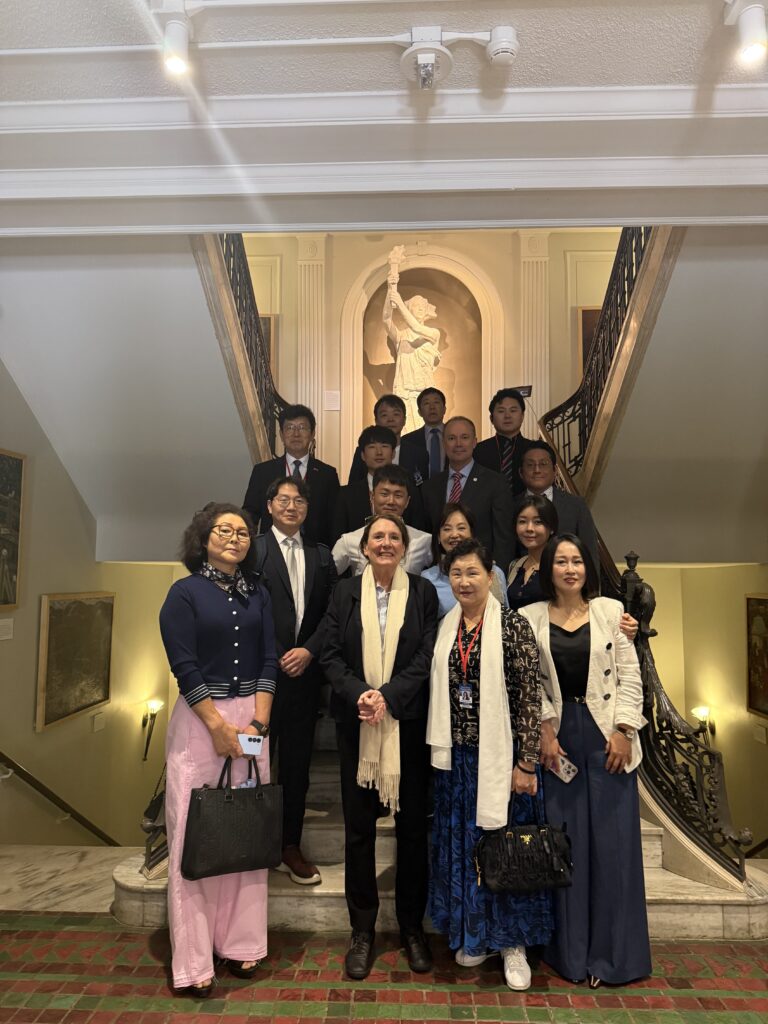
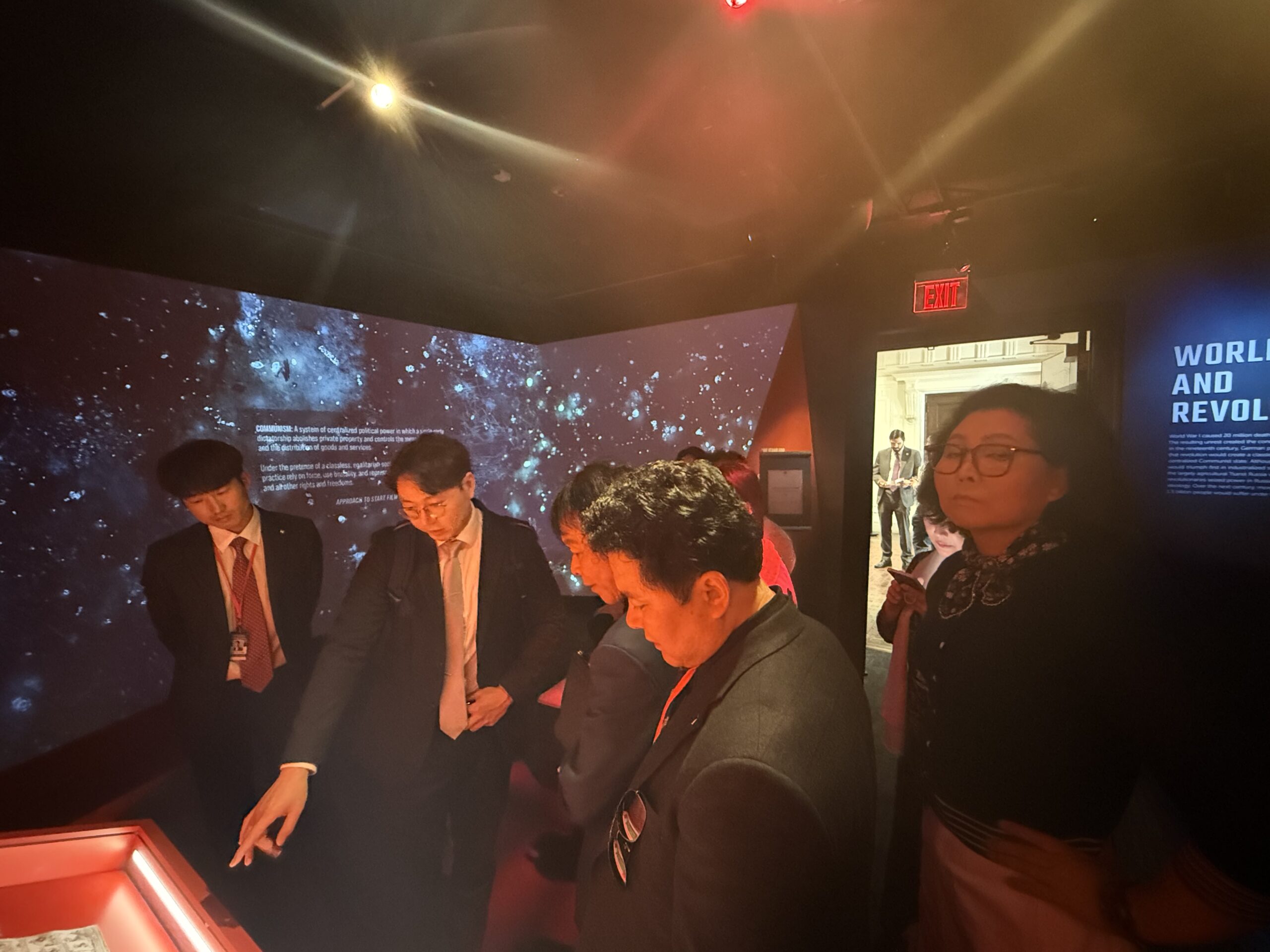
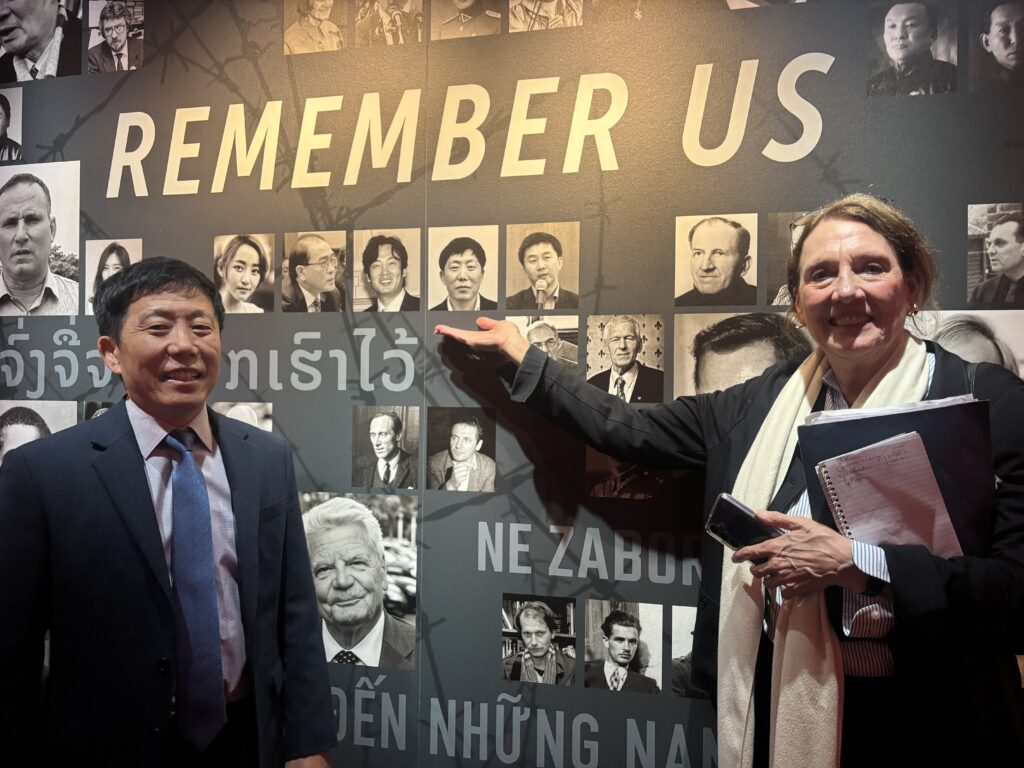
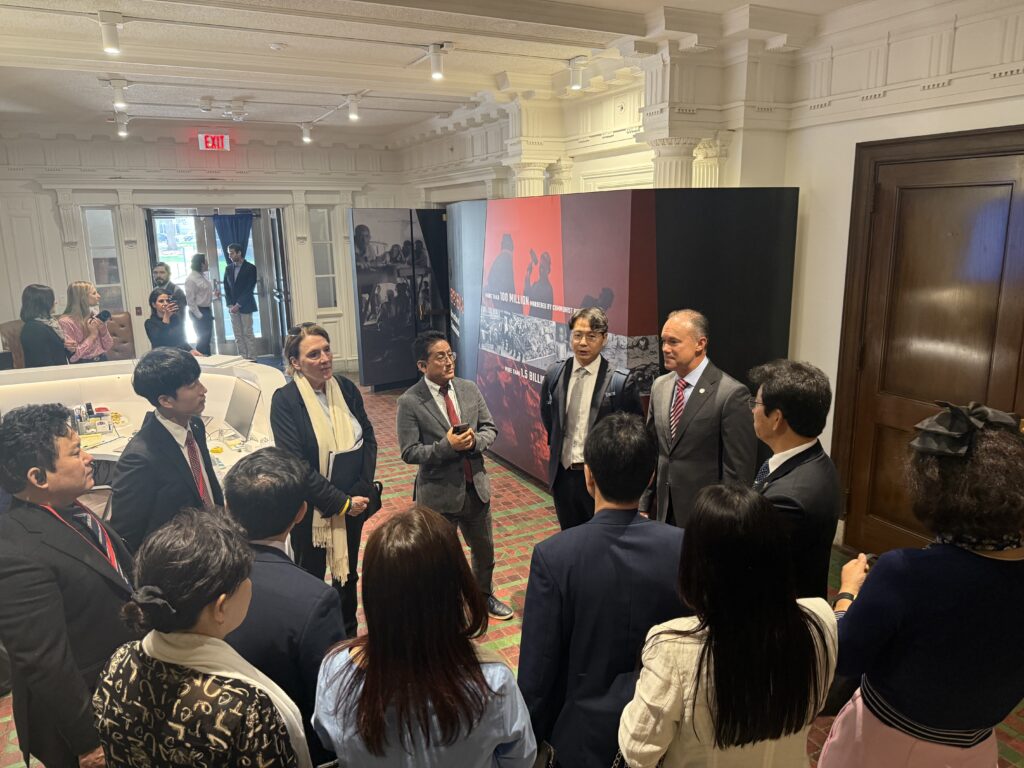
Thank you to Dr. Eric Patterson and the staff of the VOCMF for organizing a special tour of the museum for the delegation. The tour served as a powerful reminder to the delegation that where communism prevails, people suffer and are deprived of their God-given rights. The delegation renewed their commitment to advocating for the freedom of North Korea. After the tour, the delegation met with Dr. Eric Patterson and requested that the museum expand its exhibit on North Korea to provide a more detailed account of conditions inside the country and the challenges faced by its people under the Kim regime. Ji-Young Kim also suggested that the museum consider a special exhibit on the legacy of the late Seong-Min Kim, highlighting the importance of information campaigns for the North Korean people.

Senate Staff Roundtable

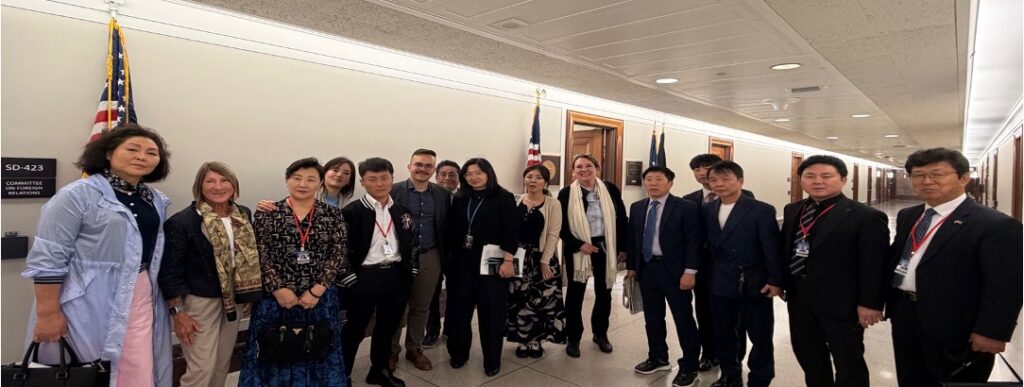
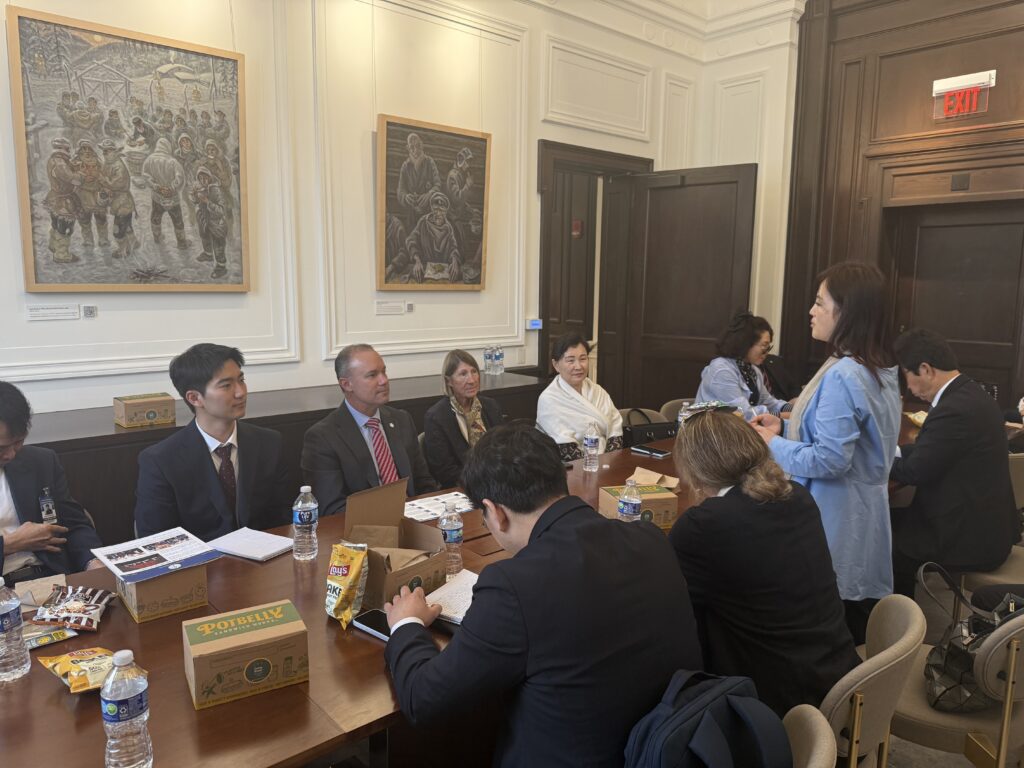
Thank you to Bessie Chen of the Senate Foreign Relations Committee and Roberto Velez of Senator Tim Kaine’s office for hosting the Senate staff roundtable. Many bipartisan Senate staff participated in the roundtable, reflecting strong interest in North Korea-related issues. The discussion covered a range of topics, including the North Korea Human Rights Reauthorization Act, conditions inside North Korea during the COVID-19 pandemic, the flow of outside information into North Korea, the current South Korean government’s oppression against North Korean defectors and their activities, and the recent North Korea–Russia cooperation.
On the North Korea Human Rights Reauthorization Act, the delegation highlighted that the Congress must pass the bill. Sang-Hak Park argued that the bill has served as a formal expression of the U.S. Congress’s concern for the human rights of the North Korean people. He explained that the North Korea Human Rights Act has functioned as a tool of international monitoring and pressure against the Kim regime. “It sends a message to the regime that the U.S. Congress, the U.S. government, and the American people are continuing to monitor the brutal human rights situation in North Korea,” said Sang-Hak Park. He added that 23 million North Koreans would also sincerely hope for the reauthorization of the bill. He emphasized that the bill provides an important foundation for continuing efforts to expose the regime’s human rights abuses and to deliver outside information and hope to the North Korean people.

When asked about the conditions during the COVID pandemic, Il-Chul Yang stated, “COVID was a major turning point for North Korea. After COVID, North Korean society changed completely, and the movement and survival methods of ordinary people became severely restricted. The regime prevented people from freely moving around the streets and created a system in which people would die inside their homes. The regime also created a civil defense-style mobilization system that could even mobilize children as young as 14 or 15. During COVID, if a person had a high fever, that person could be locked in an empty warehouse or similar space without proper medicine or treatment and left there until the fever went down. Because there was no medicine, people had to rely on grass roots and folk remedies.” Also, Il-Chul Yang explained the importance of outside information. “One of the main reasons I decided to defect was outside radio broadcasting. When ordinary North Koreans first encounter outside information, they often cannot immediately understand or accept it, because most North Koreans do not even know such information exists. However, people who encounter outside information clearly become different from those who continue to believe only the Workers’ Party’s indoctrination. Those who hear outside information begin to develop awareness of the outside world and begin to sense what the Kim regime fears, which is outside information,” said Il-Chul Yang.
Lastly, Sang-Hak Park shared the current South Korean government’s stance on North Korea. “Less than a month after the Lee government came into office, all broadcasts into North Korea operated by the South Korean military and the National Intelligence Service were stopped. With the ruling party controlling the National Assembly, legal measures are being pursued that could punish sending leaflets into North Korea with at least 1 year of imprisonment or a fine of up to about 10 million won (approximately $6,500),” said Sang-Hak Park. He emphasized that prosecuting individuals, who provide information from the free world to North Koreans and encourage them to embrace the truth and facts, as criminals is unacceptable within a liberal democratic country.